Resources & Blog
7 Crucial Questions To Ask Before Yoga Teacher Training
Students often have questions before yoga teacher training. It’s a journey that’s deeply personal and transformative, so it’s essential to choose the right program.
Today, yoga teacher training is offered everywhere – from online courses to fast-paced commercial retreats. Yet yoga, at its heart, is a profound spiritual discipline that goes far beyond fitness trends or commercialised gimmicks. A truly meaningful training honours the roots of yoga, guides you toward self-awareness, and provides a strong foundation for your future career.
So how do you know if a training program is really right for you? Here are the most important questions to ask yourself and the school before starting your yoga teaching journey…
1. What Are My Intentions for Taking Yoga Teacher Training?
Before committing to a program, take a moment to reflect: Why do I want to do this? Understanding your intentions ensures you choose a training that aligns with your goals.
Some pursue yoga teacher training to:
- Deepen their personal practice and understanding of yoga for personal growth.
- Start their own yoga studio or create a community of like-minded individuals.
- Teach in gyms or wellness centers, sharing the benefits of yoga with others.
- Travel the world while teaching yoga and exploring new cultures.
No reason is more valid than another, but clarity about your purpose allows you to approach training with intention and focus. For personal transformation, prioritise programs that emphasize yoga’s spiritual and philosophical aspects.
Ask Yourself:
- Am I doing this for personal growth, professional teaching, or both?
- What do I hope to gain from the experience?
- Does the program match the teacher or student I wish to become?
Yoga teacher training is more than a course – it is an opportunity to step into a new version of yourself. Whether your goal is to teach or to deepen your practice, having clarity about your intentions will make the experience more fulfilling and purposeful.
2. Am I Ready to Commit Fully to This Experience?
Yoga teacher training isn’t just about learning postures – it’s a transformative process that requires dedication, openness, and a willingness to explore yourself deeply.
At some schools, you’ll be living and learning in an ashram-like environment with rules that require self-discipline. You won’t be able to drink tea, coffee, or alcohol. Consuming meat or smoking may not be permitted, and for some students this is challenging.
But it’s an incredible opportunity for growth and self-mastery. Ask yourself, if you can’t manage your weaknesses and discipline for a few short weeks, when will you be able to do it? By taking the easy option, you’re likely missing out on true development.
Transformative change requires discipline. For the highest good of self-love, you need to be ready to devote yourself to the process and put in the work.
Ask yourself:
- Am I ready to dedicate time and energy to this experience? A 200-hour training, especially in an immersive format, demands focus and presence.
- Am I prepared for the physical, emotional, and spiritual challenges that may arise? Yoga teacher training can be intense – it pushes you to grow, both on and off the mat.
- Am I open to learning and unlearning? True growth often requires letting go of preconceived ideas and approaching the practice with humility and curiosity.
This isn’t a decision to be made lightly, but if you feel called to it, trust that it is for a reason. Yoga has a way of showing us what we need most, and teacher training is an opportunity to discover your strength, purpose, and path forward.
At our school, we’re here to support you every step of the way, creating an environment where you can explore your full potential.
3. Is the Program Accredited and How Was The Curriculum Developed?
Accreditation is a key indicator of a program’s credibility and dedication to yoga’s principles. Most aspiring teachers begin with a 200-hour certification, but not all certifications are created equal.
If you plan to teach in Western countries then look for programs accredited by organizations like the Yoga Alliance as this is often needed to meet insurance standards. But there’s more to a quality teaching program than just accreditation…
The curriculum is fundamental to your yogic development. It defines what you learn and how it’s taught, so it’s essential to choose a school with a robust curriculum.
Unfortunately, even in the yoga world, there are unscrupulous businesses that just want to make money. They’ll charge thousands of dollars to work through a 75-page manual that only shares half-knowledge. So it’s crucial to do your research and understand how a school’s curriculum was developed.
Ask the School:
- Does the school owner have the in-depth knowledge and experience to facilitate authentic yoga teaching (or are they just good at marketing)? Have they walked the path themself?
- What type of curriculum do they follow, what level of depth does it go into, and was it developed by an expert?
- Will my certification allow me to teach internationally (if that’s your goal)?
At Genuine Yoga School, our 200-hour teacher training is accredited by the Yoga Alliance so students receive a globally recognized certification. Our curriculum and 220-page manual was developed by an Ayurvedic doctor with a PhD in Pranayama Yoga from a renowned Yoga University near Rishikesh. So our students develop their yoga knowledge and ability based on authentic practices and deep wisdom, making them better teachers who can deliver exceptional classes that truly benefit others.
4. Who Will Be Teaching the Program and What Is Their Experience?
The quality of your yoga teacher training experience is deeply influenced by who you learn from. Yoga is more than a profession – it is a living tradition, and the teacher-student relationship plays a vital role in passing down its wisdom.
Before committing to training, take the time to learn about your teachers. Ask: What is their background? What qualifications do they hold? Beyond certifications, a teacher’s depth of personal practice, years of experience, and connection to the roots of yoga are far more telling than titles alone. Look for teachers who embody what they teach – those whose humility, wisdom, and authenticity inspire you.
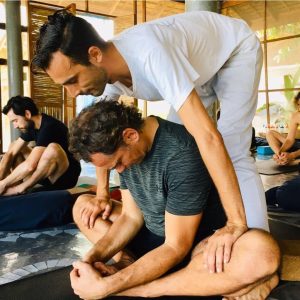
Genuine guidance requires consistent mentorship, so look for a program where your teachers are actively involved in your growth, offering hands-on adjustments, personalized feedback, and a supportive presence.
Questions to Ask the Training School:
- Who is the lead teacher and what is their understanding of yoga?
- Have they been an internationally successful teacher themselves? (If they haven’t been, how will they help you to be one?).
- Will the teachers be present throughout the program to guide and support me?
At our school, you’ll learn from a teacher with over 10 years of experience in classical yoga and Ayurveda. With over 6500 hours and 25 teacher training courses delivered around the world, he knows how to facilitate the 200-hour program with the ancient understandings and traditional wisdom and techniques of Yoga in order to ensure that your learning experience facilitates authentic yogic growth.

5. What is the Style and Lineage of Yoga Taught in the Program?
A school’s approach to yoga often reflects its authenticity and its respect for the wisdom of ancient traditions. In a world where yoga has become increasingly commercialized, it’s essential to ensure that your chosen teacher training aligns with the authentic essence of yoga.
Many programs focus heavily on the physical aspects of yoga, treating it as a fitness routine rather than a holistic practice. For example, the concept of ‘Vinyasa Flow’ is actually a Western distortion of yoga that is really just a fitness practice. If a school is teaching this, it’s a red flag that they don’t practice or share authentic yoga.
While asana (postures) is an important part of yoga, it is only one of the eight limbs of this ancient discipline. A true yoga teacher training will dive deep into the philosophy, ethics, and spirituality of yoga, honoring its roots and teachings.
For those who seek a more spiritual, transformative experience, choosing a program that prioritizes traditional yoga practices – including Kriya (cleansing technique) pancha bhuta shuddhi (cleansing of the five elements), breath extension (pranayama), Pratyahara tools and techniques (withdrawal of senses), genuine philosophy, meditation, and last but not least, a proper sattvic diet. Yoga and Ayurveda cannot be separate on the path of a devoted practitioner! This will give you a more meaningful foundation than a program focused solely on physical fitness.
Questions to Ask:
- What style(s) of yoga will be covered during the training?
- Am I seeking a deeper connection to yoga beyond the physical practice?
- Does this program resonate with my values and vision of yoga?
At our school, we believe in honoring the traditional roots of yoga while ensuring you develop the skills to share its wisdom with others. Your journey should be one that respects the past while preparing you for the future.
6. Is The Training Environment Optimised For Yogic Growth?
The environment isn’t something that most students consider in detail. It’s common to look at whether the location is easily accessible, near an airport, and generally looks like a nice place to stay. But there are specific conditions that will support true yogic growth and transformation so it’s vital to look for these when choosing a program.
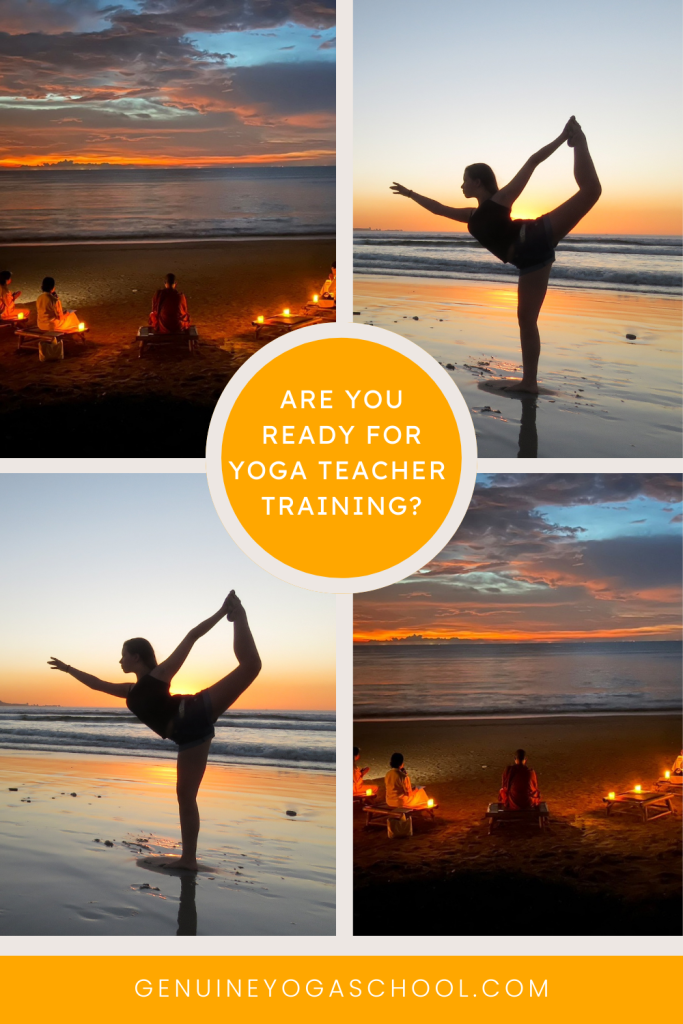
The best environment for yogic growth is somewhere surrounded by nature with no pollution. It should be somewhere that the five elements are balanced so that you’re in the optimal space for self-transformation. A peaceful location away from busy areas and tourist crowds is ideal. A beachside yoga shala isn’t since the ionized sea air can negatively affect your pitta.
Learn more… about why beach yoga can actually be bad for you.
The food on offer also plays a big role in creating the right environment. Some schools serve meals like whole pasta, brown rice, and salad every day. It may sound healthy but this kind of diet doesn’t support your body’s energy needs during training. Like any sport or activity, 30% is about physical practice and 70% is about food.
Look for schools that serve vegetarian sattvic meals – this is what the traditional texts have long recommended. Fuelling your body while also cleansing it of toxins will make a huge difference to your evolution. Eating this way, as you would in an Indian ashram, can transform how you feel.
Questions to Ask the Training School:
- Are the five elements in balance at the teaching location?
- Is it surrounded by nature?
- Do they serve Ayurvedic sattvic meals?
At our school, we’ve created the optimal environment for yogic growth. There’s a serene lake, lush gardens, and nature in every direction. You’ll enjoy nourishing and delicious Ayurvedic meals that aid your practice and help remove toxins.


7. Should I Choose a 200-hour Retreat or a Weekend Course?
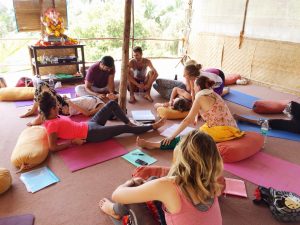
One of the key decisions you’ll make is the format of your training… Retreat-style programs provide full immersion, allowing you to step away from daily life and dedicate yourself completely to yoga for several weeks. In this sacred space, you live and breathe yoga alongside your teachers and fellow students, creating an environment that fosters deep learning, connection, and self-reflection. For many, this uninterrupted immersion is where true transformation begins – not just as a student of yoga but as a human being.
Weekend or part-time courses spread over months can seem practical for those with full-time commitments. However, this format can sometimes lack the depth and continuity of an immersive experience. A fragmented schedule may make it harder to integrate the teachings fully, especially when life’s responsibilities pull your attention elsewhere.
When your learning is divided, so is your path. Fragmented practice often leads to situations where you are simply treading water instead of moving forward.
Our bodies are like a rubbish bin – we accumulate toxins and tension (physical, emotional, and mental). Going to an asana class empties some of the rubbish but then you go to work the next day and stress refills it. You go to another class, empty again, and feel better, but then there’s a BBQ in the evening with burgers and french fries that refill the bin with toxins again. It’s a cycle that repeats.
But in an ashram-like environment, you empty every day. Without work stress, negative news, unhealthy food, and so on, you stop accumulating. It’s something that only retreat-style trainings can provide.
A word of caution: Avoid online-only training programs. Yoga is a hands-on discipline that requires personal guidance and in-person connection to grasp adjustments, alignment, and energy work.
Learn more about the downsides of online yoga training here.
Ask Yourself:
- Am I ready to immerse myself fully in a retreat-style training?
- Can I dedicate uninterrupted time to focus on my yoga journey?
- Will spreading the course over months hinder my ability to stay consistent and focused?
At our school, we offer immersive training designed to give you the time, space, and support to experience yoga in its fullest form. This is not just about certification – it’s about transformation, and the environment in which you learn can make all the difference.
Your Journey Begins With the Right Questions
By asking the right questions, you can ensure that the training program you choose aligns with your values, goals, and the authentic essence of yoga.
At our school, we understand that this journey is deeply personal. That’s why we are here to guide you every step of the way – offering a training experience that is grounded in tradition, enriched by wisdom, and tailored to support your unique path.
Whether you are ready to deepen your practice, share the gift of yoga with others, or embark on a journey of self-discovery, we invite you to take the first step.
Secure your place in our next 200-hour Yoga Teacher Training program.